A reefer on the road doesn’t mean a cold load. Pre-cooling, live alerts, clean records and one owner for the whole route do.
11 p.m., somewhere past Ambala. A reefer carrying biologics out of Baddi has a compressor that quit an hour ago. The driver has no idea, because nothing in the cab beeps. The logger in the cargo box is recording every degree, but nobody will read it until the truck reaches Delhi. By then the load has spent four hours above 8°C. The batch goes into quarantine, your QA team opens a deviation, and your client wants to know what happened.
That’s how most cold chain losses happen. Not with a crash or a fire, just a small gap nobody was watching. So when you shortlist transport and logistics companies, the rate per kilometre is the least useful line on the quote. What matters is who spots the problem first, and what they do in the next 30 minutes.
A Reefer Truck Isn’t a Cold Chain
A regular freight carrier has one job: get goods from A to B on time and in one piece. Cold cargo adds a second job that never pauses. The temperature has to hold at every step, including the ones people forget. Think of the 40 minutes a pallet sits on an open dock, or the wait at a hospital gate while someone hunts for the store keeper.
Plenty of transport and logistics companies own reefers and run them exactly like dry vans. The box gets loaded warm and cooled on the move. Cartons are stacked wall to wall, so cold air can’t circulate. A six-drop route opens the doors six times on a hot afternoon. Each of those habits costs you a degree or two, and the cargo pays for it.
Bands matter here too. Vaccines, insulin, milk and fresh produce travel at 2-8°C. Ice cream, frozen meat and seafood need -18°C to -25°C. Many tablets and syrups only ask for 15-25°C. That sounds easy until May, when the inside of an ordinary truck on an Indian highway climbs well past 40°C. A partner worth hiring asks about your product before quoting a rate.
“A logger that is only read at delivery is a record of the damage, not a way to stop it.”
— Versailles Cold Chain Editorial
What Good Transport and Logistics Companies Check Before Loading
The most useful checks happen before the truck moves. Ask any provider to walk you through these four.
Pre-Cooled Reefer Box
The cargo space should reach its set point before the first pallet goes in, which usually takes 30 to 60 minutes. A reefer is built to hold temperature, not to pull warm cargo down.
Product Temperature at Handover
The product itself should be probed and logged at loading. If goods arrive at the dock warm, a good team flags it right there instead of carrying the problem down the highway.
Loading Pattern and Airflow
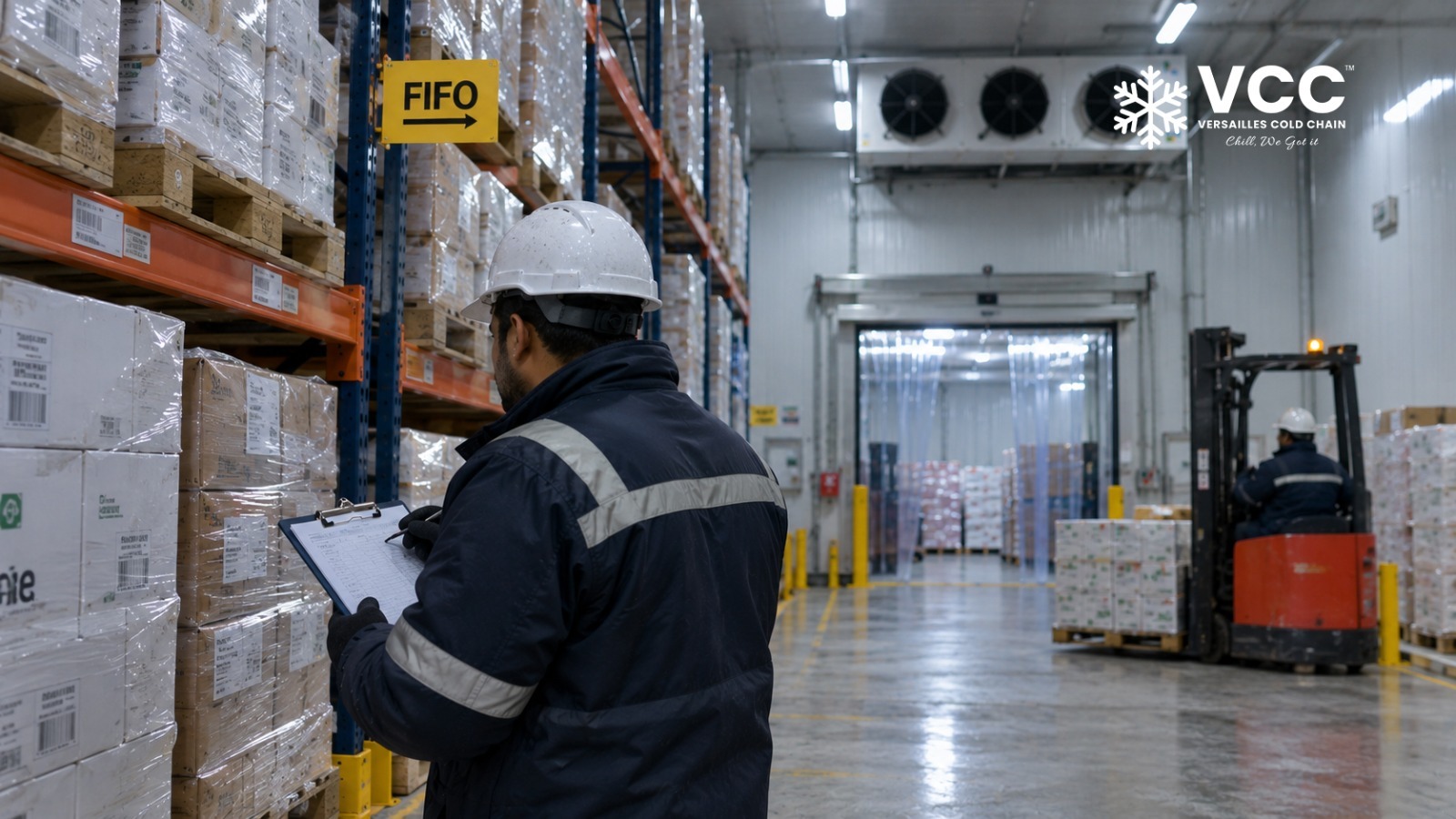
Pallets need a gap at the walls and below the ceiling so return air can flow. If the load is packed tight, the middle of it warms up even while the display looks fine.
Calibrated Loggers on the Cargo
Sensors should sit inside the load with valid calibration certificates. A sensor near the evaporator or in the cab isn’t enough on its own.
Who Gets the Alert at 2 a.m.?
Logs tell you what already happened. Alerts are what let you act.
Real-time monitoring means IoT sensors send readings every few minutes to a dashboard that can’t be edited after the fact. The useful part is what happens when a reading drifts. That person on duty will be contacted by phone or SMS and should know what to do next. This could be inspecting the reefer, moving to the nearest refrigerated facility or switching the load to another truck. When meeting with logistics firms, find out who that person is and what his/her response time is.
Transit planning belongs in the same conversation. A Delhi to Mumbai road run of about 1,400 km usually takes 36 to 48 hours door-to-door. Ask about their last breakdown. A straight answer tells you more than any brochure.
Paperwork That Holds Up in an Audit
When it comes to drugs, the requirement is Good Distribution Practices along with WHO guidelines for handling temperature-sensitive items. This means that there must be SOPs in place, qualified drivers and staff, and calibrated instruments. It also means an excursion report for every breach, with a cause and a fix. “It stayed cold” won’t satisfy an auditor. A time-stamped log will.
Food and dairy loads fall under FSSAI norms for chilled and frozen products. The rules differ, but the habit is the same: check on receipt, write it down, hold the right band, and deliver first in, first out.
Here’s a quick test for the transport and logistics companies on your shortlist. Pick a delivery from last month and ask for its full temperature record, from loading to proof of delivery. A good team sends it the same day.
Where the Chain Usually Breaks
Most excursions don’t happen on the highway. They happen at handovers. You hire one vendor to store your stock and another to move it, each with its own SOPs and its own data. When something slips at the dock, each side points at the other. You’re left with a lost batch and two sets of logs that don’t match.
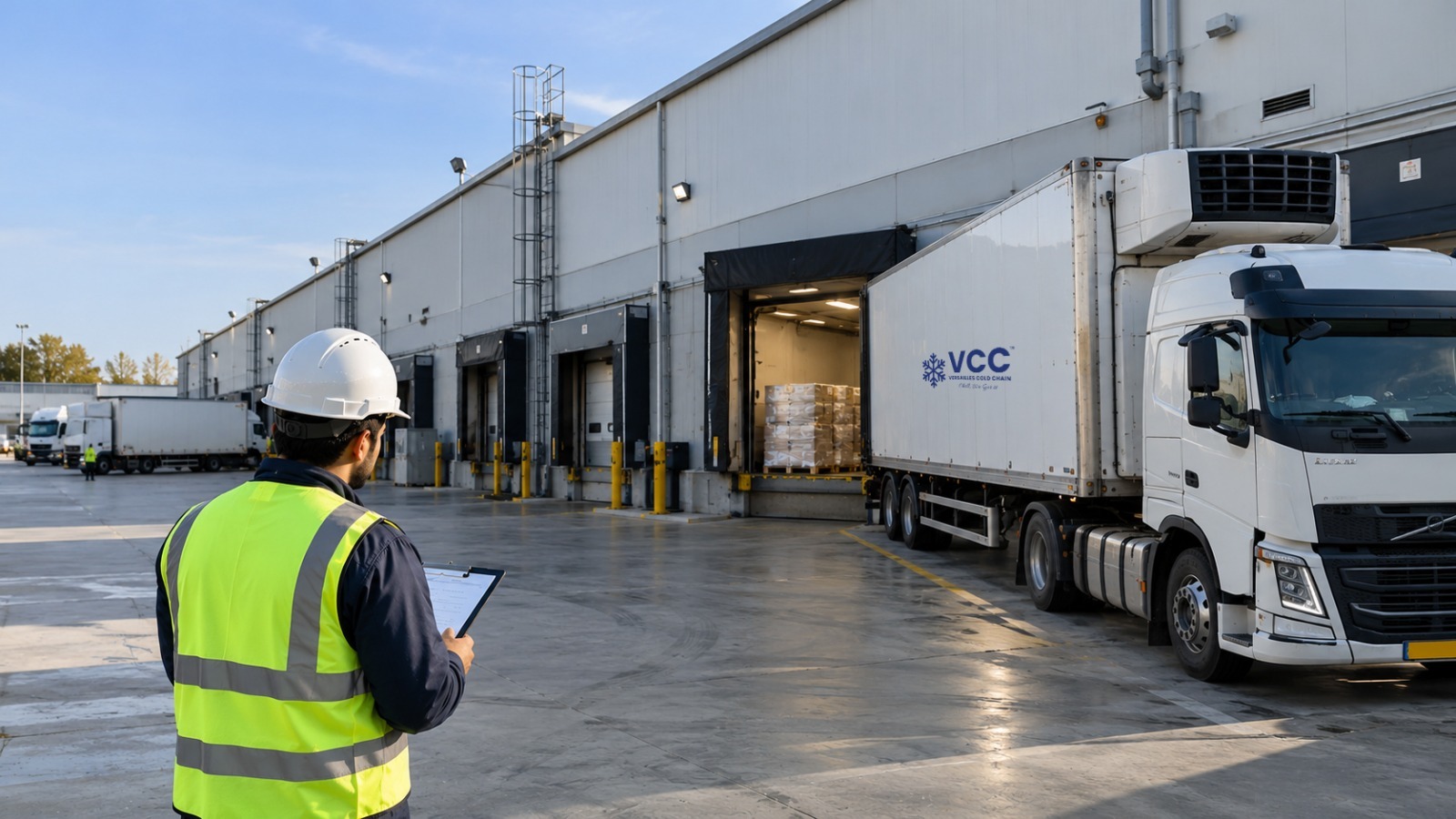
Proper cold chain logistics treats storage and movement as one job. Pairing GDP-compliant storage with temperature controlled transport under one operator closes that gap. You get sealed docks, pre-cooled vehicles and a single temperature record from the cold storage warehouse to your customer’s door. That’s why some transport and logistics companies in India now run storage next to their fleets. It’s also why buyers with sensitive cargo often prefer one partner over three.
Before you sign with any provider, ask for four things: proof of pre-cooling, a live tracking demo, a named alert owner, and a full temperature record from a past delivery. A provider who can show all four has earned some trust.
Ready When You Are
Versailles Cold Chain is built around that single-chain idea. It brings GDP-compliant cold storage warehousing, IoT-tracked real-time temperature monitoring and temperature controlled transport under one operator. It’s meant for cargo that can’t afford a single degree of error, from vaccines and biologics to dairy and frozen foods.
Share your product, temperature band and lanes with us. You can request a quote, or ask for a facility walkthrough to see how the monitoring and dock handling are set up before you decide.