Mapping reports, backup power, live alarms and audit records. These four things tell you whether a room really holds its temperature or only looks cold.
Monday, 7 a.m. The phone rings. Your cold storage room lost power on Sunday night, and the generator took its time kicking in. The logger says 13°C for nearly six hours. The wall display says 4°C, because it reset itself once the power came back. Nobody called you overnight. Now there are a few hundred cartons of insulin you can’t sell, and an auditor asking for paperwork.
It’s a bad morning, but mostly an avoidable one. A lot of buyers pick storage the way they’d pick a godown: rate per pallet, distance from the highway, sign here. For stock that has to stay cold, that shortcut gets expensive. So before you commit, check a few things.
One Reading at the Door Proves Very Little
The number on the wall is a single spot in a big room. Cold air pools near the evaporator and gets sluggish in the corners. A tightly packed stack can sit three degrees warmer than the aisle next to it. If you’re holding vaccines at +2°C to +8°C, three degrees is the whole margin.
Different products need different bands. Frozen meat and ice cream sit at -18°C to -25°C. Plenty of tablets and syrups only need 15-25°C, which sounds easy until May, when an ordinary warehouse in India touches 40°C and keeps climbing. Humidity matters as well, since damp air softens cartons and lifts labels. Each band should get its own zone.
Ask for the mapping report. A real study puts sensors at different heights and corners, runs with the room empty and again fully loaded, and gets repeated in summer and winter. A cold storage room that’s never been mapped is basically a guess. At VCC, chambers are mapped at 24 points, empty and loaded, in peak summer and peak winter, and permanent probes then go exactly where the study finds the hot and cold spots.
“If a temperature excursion is only discovered at delivery, it was never really controlled.”
— Versailles Cold Chain Editorial
Build Quality That Keeps the Cold In
A good cold storage room starts with the shell and the machinery behind it. Four things are worth asking about.
150mm PIR Insulated Panels
Polyisocyanurate sandwich panels with a continuous vapour barrier keep heat out better than basic EPS panels, and they cut down condensation and thermal bridging.
Refrigerated Dock Bays
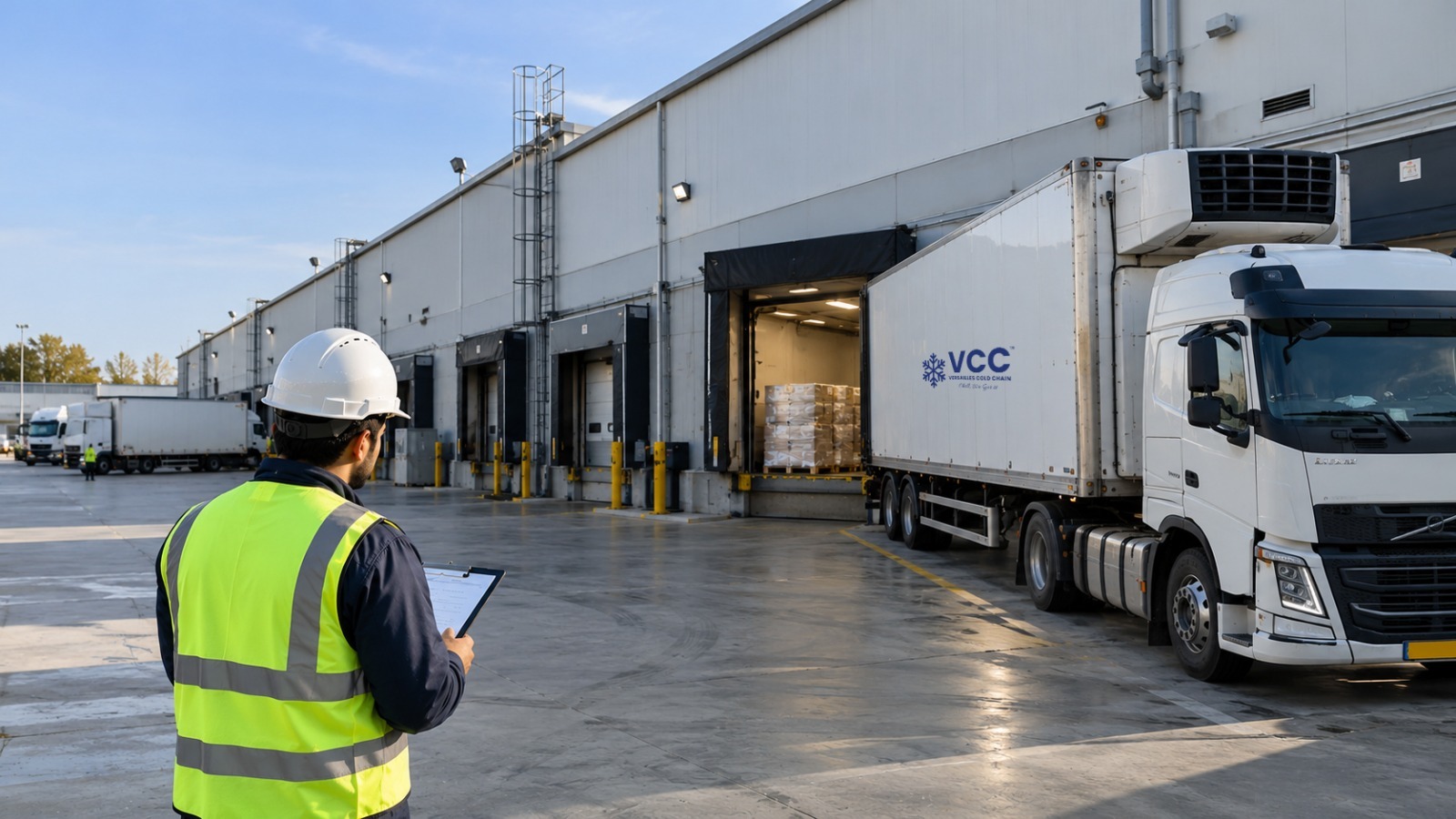
The loading bay is where cold rooms quietly lose the most. A refrigerated bay with inflatable dock seals stops outside air from rushing in while a truck is being loaded.
N+1 Compressor Redundancy
Two independent refrigeration units run on lead-lag rotation. If one goes down for service, the other carries the full load.
Dual DG Power Backup
Two diesel generators with automatic transfer switches pick up within seconds of a grid cut, so multi-tier VNA racks don’t warm up.
Notice how a provider answers the generator question. A pause tells you plenty.
Who Gets the Alarm at 2 a.m.?
Logs tell you what already happened. Alarms are what let you act.
With IoT-tracked monitoring, calibrated sensors record conditions every 30 seconds and send them to cloud logs that can’t be edited afterwards. The useful part is the alert. When a reading drifts, a named person should get an SMS or a call, and know what to do next. Find out who that person is and how quickly they’re expected to respond. Also check when the generator was last tested under real load, not just started for five minutes.
And ask to see alarm history from a live cold storage room, not a demo unit. Real rooms have messy histories, which is fine. What you’re looking at is how fast each one got fixed.
Paperwork That Survives an Audit
For medicines, the yardstick is Good Distribution Practice. GDP-compliant storage means written procedures, trained staff, controlled entry, calibrated sensors, and a record every time stock moves. “We always keep it cold” won’t satisfy an auditor. A time-stamped log will.
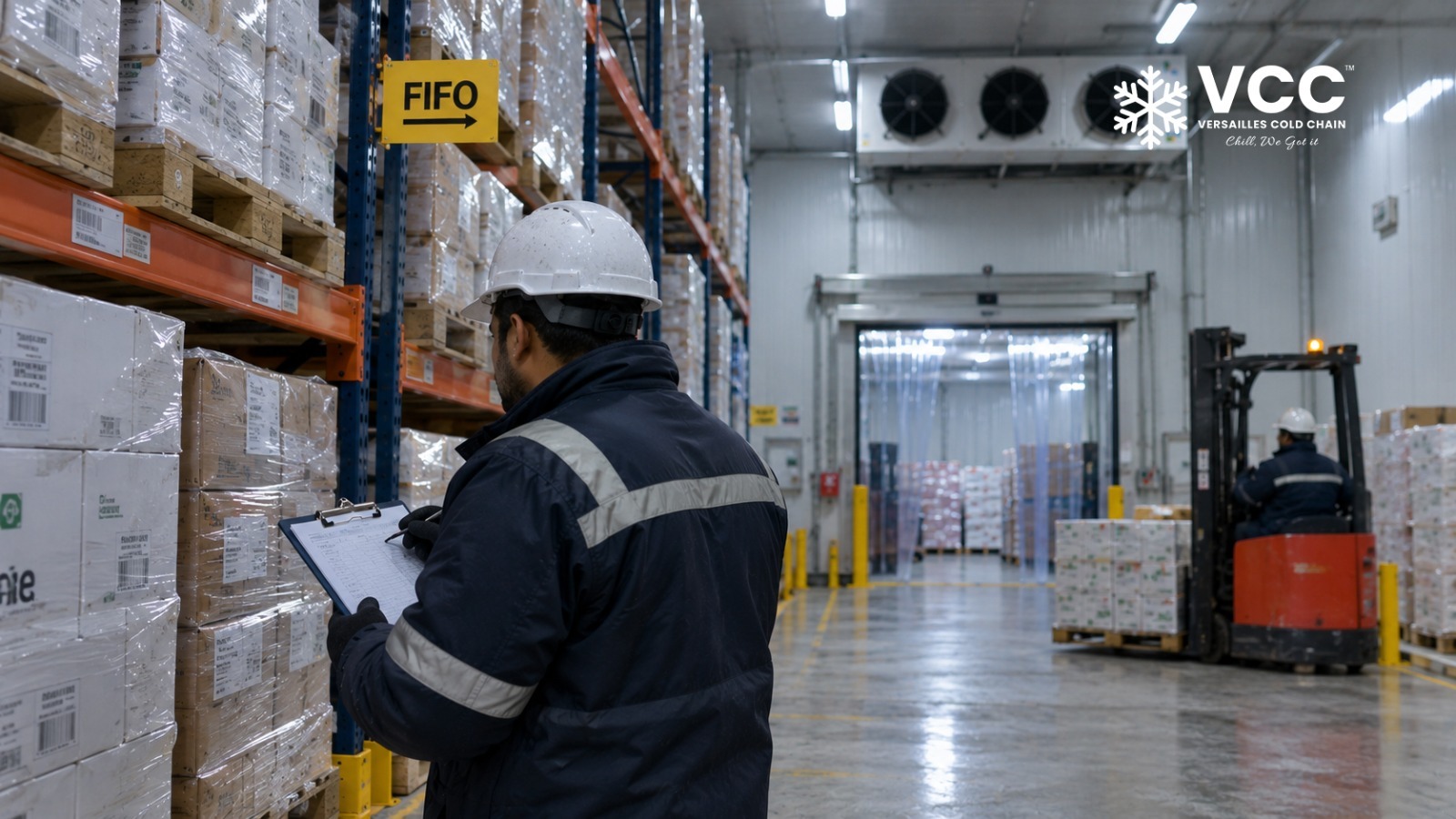
Food and dairy fall under FSSAI norms. The details differ, but the habit is the same: check on receipt, write it down, store in the right zone, first in, first out.
Medicines and open food shouldn’t share a cold storage room. Smells, spills and pests don’t belong near pharma stock. Look for labelled zones, separate racking and a marked corner for damaged or rejected goods.
Here’s a quick test. Pick any pallet and ask the team to trace it from receipt to dispatch. A good team does it in minutes. If the answer is “by tomorrow”, imagine a recall.
Where the Chain Usually Breaks
A pallet leaves the cold dock, waits twenty minutes on a warm bay, then goes into a truck whose reefer unit was never pre-cooled. Whatever you paid for inside the cold storage room is gone before the goods reach the shop. An overloaded freezer at the retailer’s end can finish the job.
Proper cold chain logistics treats storage and movement as one job. That means sealed docks, pre-cooled vehicles, and temperature controlled transport with loggers on the cargo itself, not just in the cab. It’s why many buyers prefer a single cold storage warehouse partner that also runs the vehicles and the tracking. One party owns the temperature from receipt to handover, so when something slips you’re not chasing three vendors for a straight answer.
Peak season is worth a question too. Space is easy to find in February and tight before a vaccine drive or a festival rush.
Before booking a cold storage room, ask for four things: a temperature mapping report, a tested backup power plan, alarm history from a live site, and a pallet trace from receipt to dispatch. A provider who can show all four has earned some trust.
Ready When You Are
Thinking about building your own cold storage room? Insulation, refrigeration, backup power, validation and trained staff add up fast, and the first pallet may be months away. If your volumes swing with the season, shared space starts sooner and scales easier.
Reach out to Versailles Cold Chain with your product, temperature band and monthly pallet volume, and let’s design a validated storage and distribution workflow that protects your cargo from dock to doorstep.