Your cold chain only holds if storage, trucks, hubs and peak-season capacity are planned together. A cheap truck rate doesn’t make up for that.
It’s the second week of April, and your ice cream orders have doubled in a fortnight. Your transporter calls to say only four of the ten reefers you booked will turn up, because a bigger client grabbed the rest. Your cold store is full, so the extra stock waits in a chiller van parked outside the plant. Distributors in Jaipur and Lucknow are already asking where their loads are. By Friday you’re paying spot rates for whatever vehicle you can find, and some of the stock arrives soft.
Nothing here broke in a dramatic way. You had three vendors, each doing their own small part, and nobody looking at the whole picture. That’s the gap good logistics solutions are meant to close, and it’s widest in the months when you can least afford it.
Why Dry-Freight Logistics Solutions Fall Short for Cold Cargo
Most logistics solutions in India were built for dry freight. You book a truck, fill it, track it and deliver it. More cargo means a bigger truck, and a delay means an unhappy customer but rarely a ruined product.
Cold cargo changes the maths. A day’s delay on a load of paneer or fresh berries eats a real share of its shelf life. Insulin and vaccines have to stay at 2-8°C the whole way, frozen meat and ice cream need -18°C to -25°C, and many tablets want 15-25°C even in a Delhi summer. A plan that treats all of these as plain “cargo” will get one of them wrong.
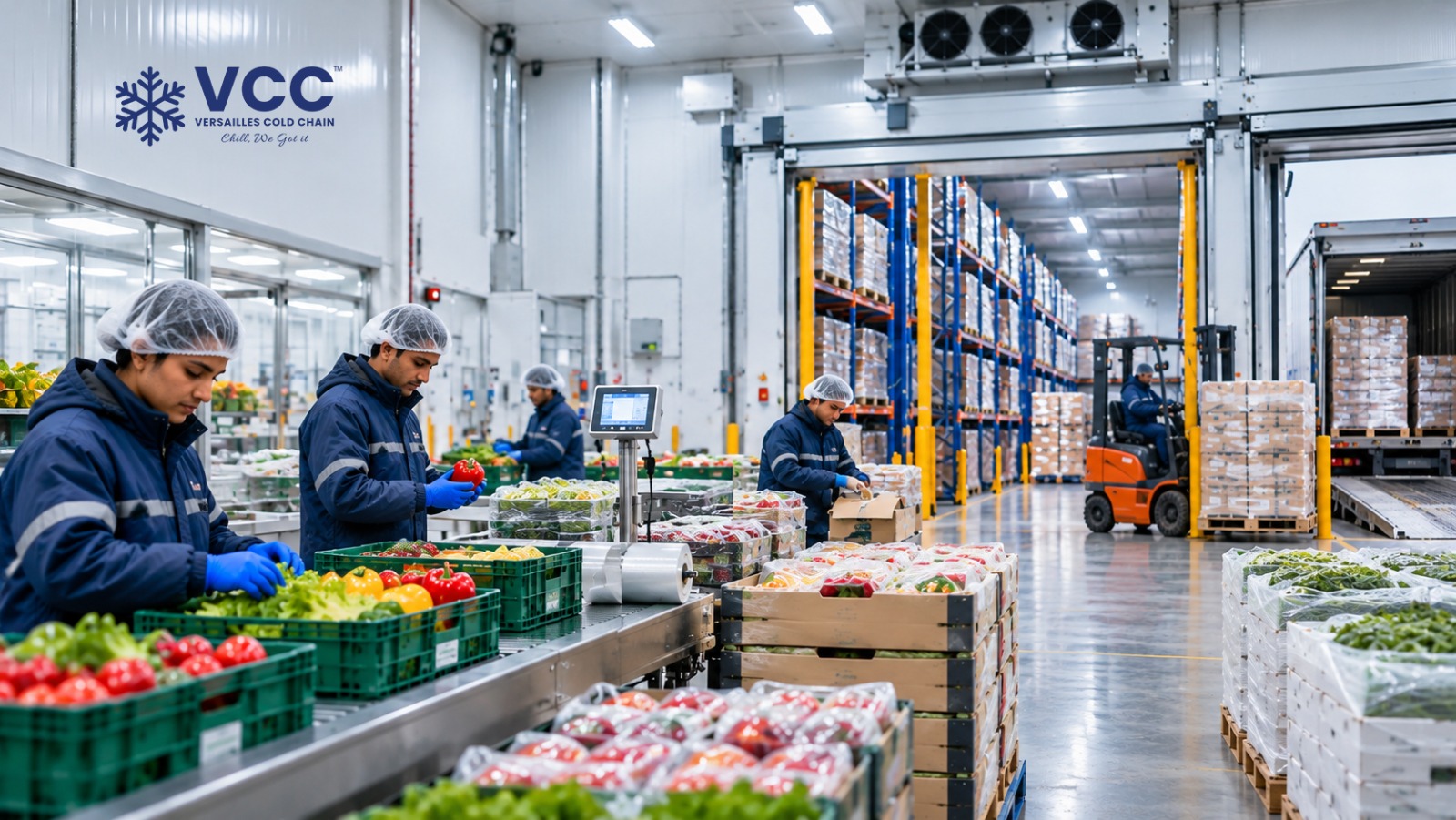
The difference also shows up in small habits. A cold-ready partner pre-cools the reefer before loading, leaves gaps between pallets for airflow, and plans multi-drop routes so the doors open as few times as possible. A dry freight partner usually doesn’t think about any of that.
“A cheap lane rate costs nothing until the week it’s the reason half your stock spoils.”
— Versailles Cold Chain Editorial
The Four Legs of a Cold Supply Chain
A cold supply chain usually has four legs, and each one needs a slightly different plan.
Primary Movement
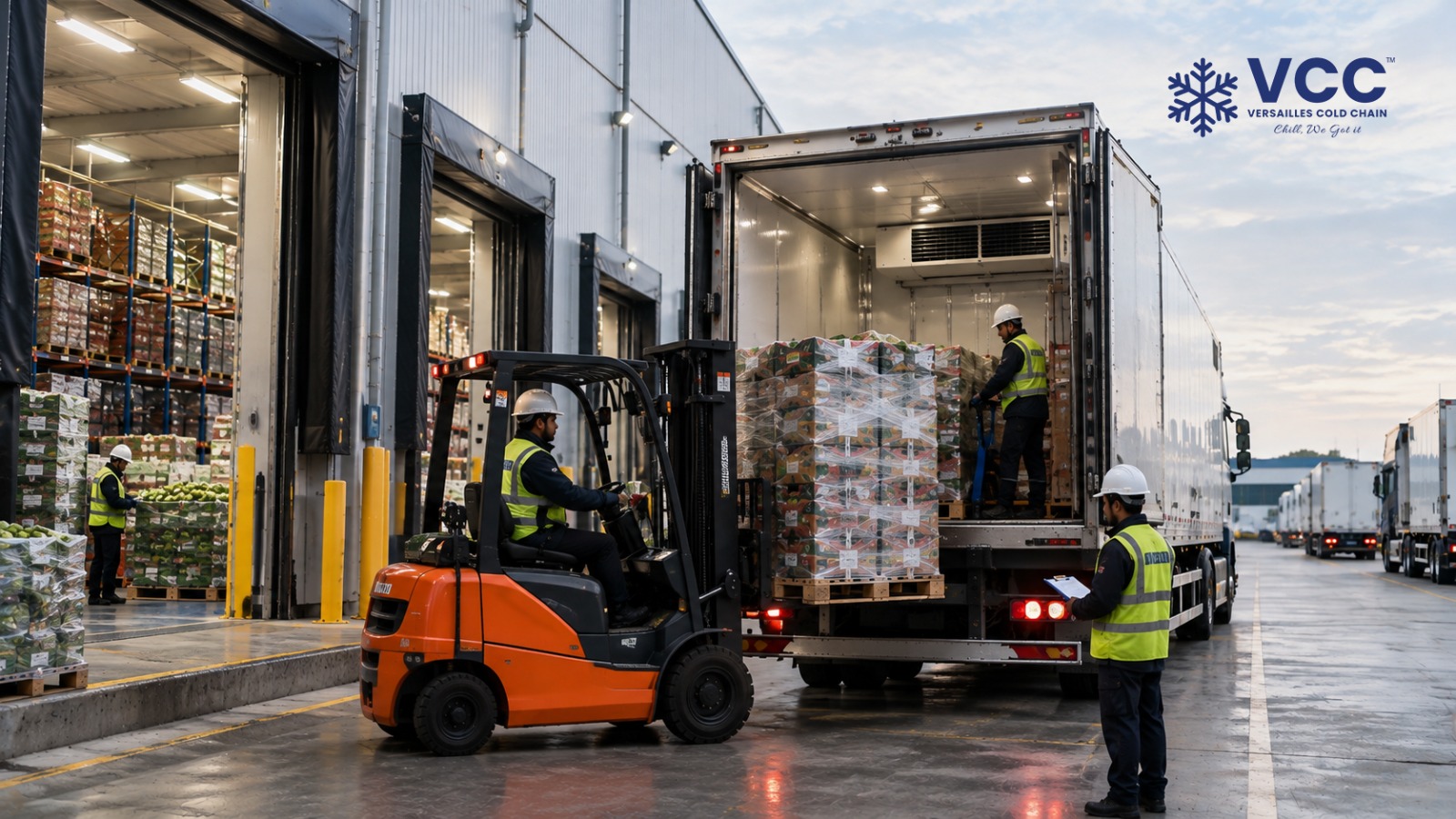
This is the long haul from your plant or port to a main cold storage warehouse. Loads are full, routes are fixed and timing is predictable. The focus here is reliable reefers, live temperature tracking and a backup vehicle on long routes like Punjab to Maharashtra.
Secondary Distribution
From the main store, stock goes out to distributors, hospitals and modern trade depots. Loads are smaller, drops are frequent and every door opening matters. Route planning and right-sized vehicles do most of the work here.
Last Mile
Quick commerce and city pharmacies need small, frequent top-ups. Insulated boxes with gel packs or small refrigerated vans cover the final few kilometres, and turnaround is measured in hours rather than days.
Surge Capacity
The festive period, summer time and vaccine campaigns may cause an increase in demand to double within a couple of weeks. Good planning will ensure that this capacity is pre-booked and not sourced in the midst of the crisis.
Where Your Stock Sits Decides How Fresh It Arrives
Location where your stock sits is just as important as movement. Have everything in one place and every order travels long distances, thus resulting in longer transportation time and increased risks. Spread your inventory in too many small facilities and you get partially filled storage chambers and wrong location of your inventory.
In most cases, businesses operate in between the two extremes described above. There is a central hub located in proximity to manufacturing facilities and the forward stock is kept near high-demand areas. North India is a perfect example for that. One can have a hub in Punjab/Haryana that delivers stock in about six to eight hours drive to Delhi NCR and another day to Jaipur and Lucknow. In case of perishable dairy, the difference of one day is very crucial. In case of frozen products, once-a-week replenishment of forward storage might do.
Correct solution highly depends on your product's shelf life, order sizes and delivery time. Every reputable logistics company would like to know about all of the above before suggesting the network.
Plan the Peak Before It Arrives
Most cold chain trouble starts in the same few weeks every year. Ice cream and beverages peak from March to June. Dairy demand jumps around Diwali, when the sweet shops are busy. Vaccine campaigns can come with only a few weeks’ notice.
Strong logistics solutions plan for these peaks in winter. That means agreeing extra reefer capacity, reserving cold storage space and pre-building stock in forward hubs before demand arrives. When you speak to providers, ask how much extra volume they can take in their busiest month and how much notice they need for it. A vague answer here tells you exactly what will happen in April.
One Operator or Three Vendors?
The patchwork model looks cheaper on paper. One vendor stores, another trucks, a third runs last mile, and you pick the lowest rate for each. The cost turns up later, at the handovers. Stock waits on a warm dock because the truck is late. A reefer arrives without being pre-cooled because nobody told the driver what was loading. When something goes wrong, each party points at the other.
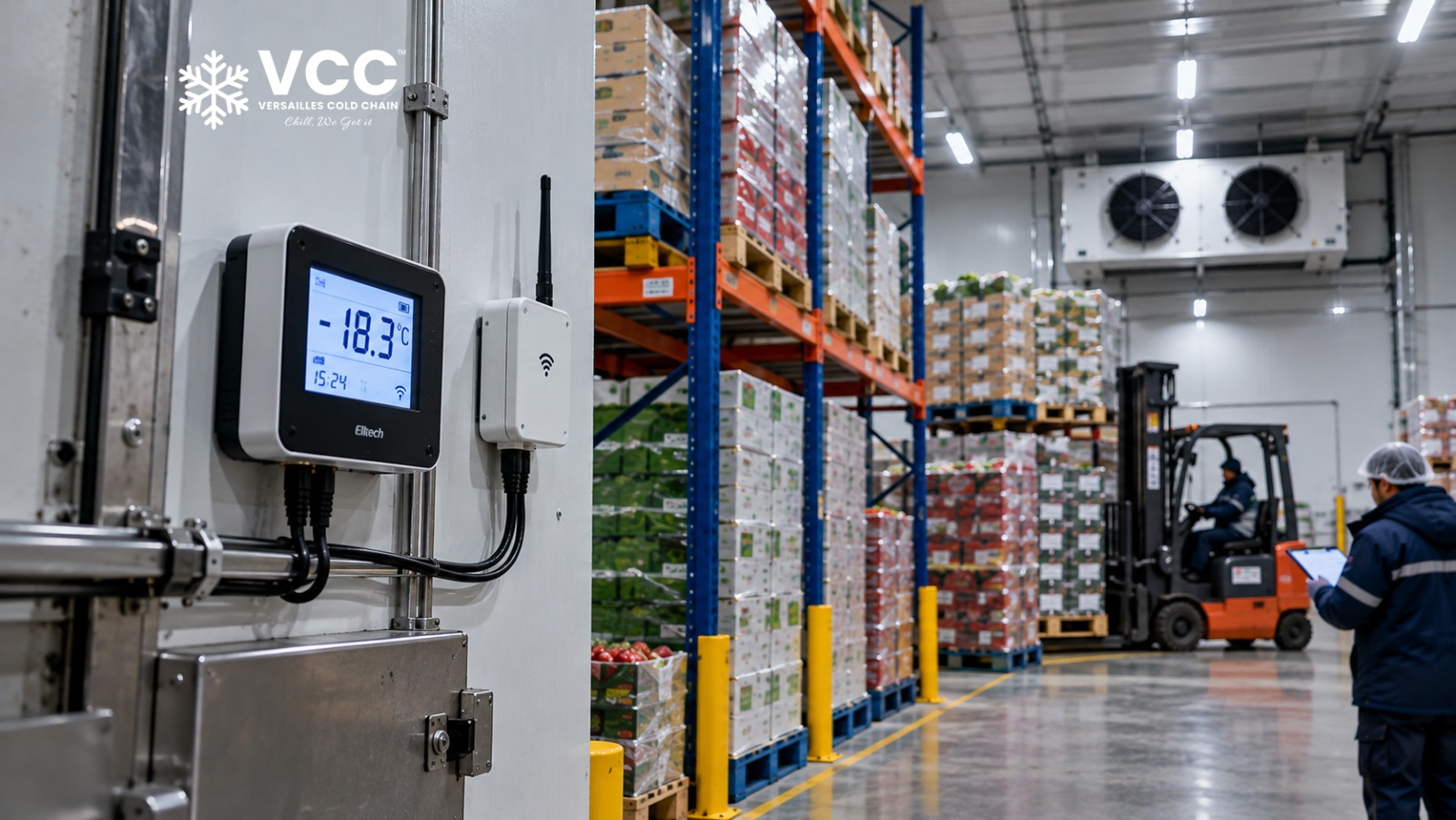
Integrated cold chain logistics fixes this by putting storage, transport and tracking under one roof. Pairing GDP-compliant storage with temperature controlled transport means the same team owns the dock, the truck and the temperature data. When the plan slips, one person picks up the phone and sorts it out. For most growing brands, that single owner is worth more than a few rupees saved per kilometre.
Before choosing between logistics solutions, ask four things. How will each of the four legs be handled? Where should your stock sit? How much peak capacity is booked for you? Who is the one person you call when it goes wrong? If a provider answers all four without hesitating, you’re probably talking to the right team.
Ready When You Are
Versailles Cold Chain is built for cargo that can’t afford a single degree of error. It brings GDP-compliant cold storage warehousing, IoT-tracked real-time temperature monitoring and temperature controlled transport under one operator, for pharmaceuticals, vaccines, dairy, frozen foods and other perishables.
For those looking to review logistics solutions for pharmaceuticals, dairy, or frozen food, please give us your product information along with peak season quantities and lanes. You may ask for a quote or for a tour of our facility, and we will go over an option for you.