Storing and moving cold stock is only part of the job. The work done on it in between often decides whether it sells.
Tuesday, 4 p.m. A modern trade chain sends back 300 cartons of frozen parathas because the shelf labels show last month’s MRP. The product is fine and still sitting at -18°C. But it can’t go out again until every carton is relabelled, and your warehouse doesn’t do that. So the pallets get loaded onto a truck, driven to a co-packer across town and left on an open dock for an hour while someone finds a spare team. They come back with the stickers fixed and a temperature spike in the logger. A small label error has now cost you a delivery slot, two trips and a batch you’re not fully sure about.
That’s the real case for value added services in cold storage. With dry goods, sending stock out for rework is an annoyance. With chilled or frozen goods, every extra trip is a fresh chance to break the chain, so the safest place to fix a carton is the same chamber it’s stored in.
What Counts as Value Added Services in a Cold Store
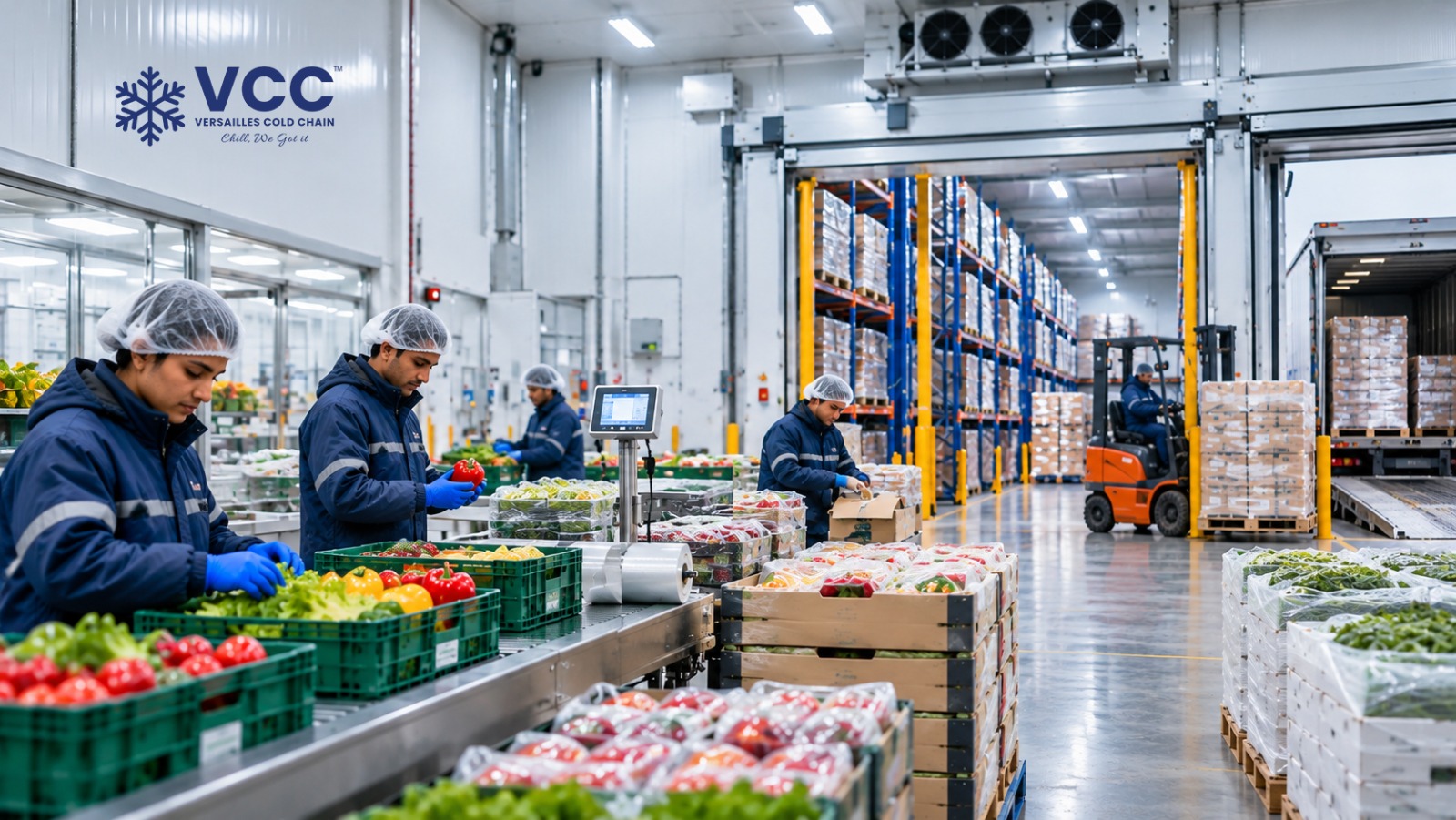
Ask ten managers of warehouses and there will be ten different variations of the list. At the cold storage facility, this will normally include tasks such as relabeling, kitting, repackaging, sortation of batches, quality inspection of items as they arrive, and preparation of goods for distribution into specific channels, such as modern trade, hospitals, and fast commerce. Pre-cooling is offered for fresh products, while blast freezing is available for meats and seafoods.
What ties these together is simple. Each one touches your product, and each one can quietly undo the temperature control you’re paying for if it’s done in the wrong place. A carton relabelled in a warm corridor has left the cold chain for those twenty minutes.
Done well, value added services are almost invisible. Orders leave on time, the right labels are on the right boxes, and nobody has to explain an extra trip. You only notice them when they’re missing, usually on the day a buyer rejects a load.
“Every carton that leaves the cold zone for rework comes back a little warmer than it went out.”
— Versailles Cold Chain Editorial
Four Jobs That Belong Inside the Cold Zone
These are the jobs pharma, dairy and food teams ask for most. Each one should be done inside a temperature-controlled area, never on an open dock.
Relabelling
Changing MRP stickers, adding importer details or applying a retailer’s own barcodes comes up almost every week. When the work happens inside the chamber, a team can turn around a few hundred cartons in a shift without the stock ever warming up.
Kitting and Co-Packing
Festive hampers, sample kits and mixed cases for quick commerce often combine several SKUs into one unit. Packing chocolate at 15-25°C or dairy at 2-8°C keeps every item in its band from start to finish.
Repacking and Lot Splitting
Bulk loads often need breaking into smaller lots for distributors, clinics or dark stores. Each lot should still carry its batch number and expiry on the outside, so nothing gets mixed up further down the line.
Inbound Checks
Every inbound pallet should be counted, probed and checked for damage before it goes onto a rack. A carton of curd that turns up at 12°C needs to be flagged at the door, not discovered next to good stock a week later.
One line is worth drawing early. Anything that changes the product itself, like primary packing of medicines or opening sealed food packs, needs separate licences and belongs with a manufacturer or licensed packer. Value added services in a cold store should stay on the outside of the pack.
Pre-Cooling and Blast Freezing: The Extras That Protect Shelf Life
Some of the most useful extras aren’t about cartons at all. They’re about what happens to the product in its first few hours.
Fruits harvested during the middle of the day may have temperatures of up to 30°C or even higher. Putting such fruits directly into rooms that range from 2-8°C results in difficulties for the rooms to cope and the fruits continuing to ripen for several hours. The forced air cooling takes the field heat away fast enough, normally in just a couple of hours.
Frozen goods have the same problem in reverse. Meat, seafood or ready-to-cook food that is packed warm and put straight into a -18°C store freezes slowly. That forms large ice crystals and leaves a mushy texture once the food thaws. A blast freezer running at around -35°C to -40°C brings the core temperature down fast, then hands the product over to normal frozen storage.
Pricing and Capacity You Should Ask About
Ordinary warehouses price per pallet and keep the extras vague. Cold storage buyers should push for the opposite. Ask for value added services to be priced per unit or per carton up front, with a stated turnaround time and a daily capacity. A team that can relabel 500 cartons in a shift is a very different partner from one that manages 50.
Then ask what happens in a rush. A festive season, a new retail listing or a vaccine drive can triple the kitting load in a week. You want to know whether the team grows to meet it, or whether your job just joins the back of the queue.
Where Rework Meets the Road
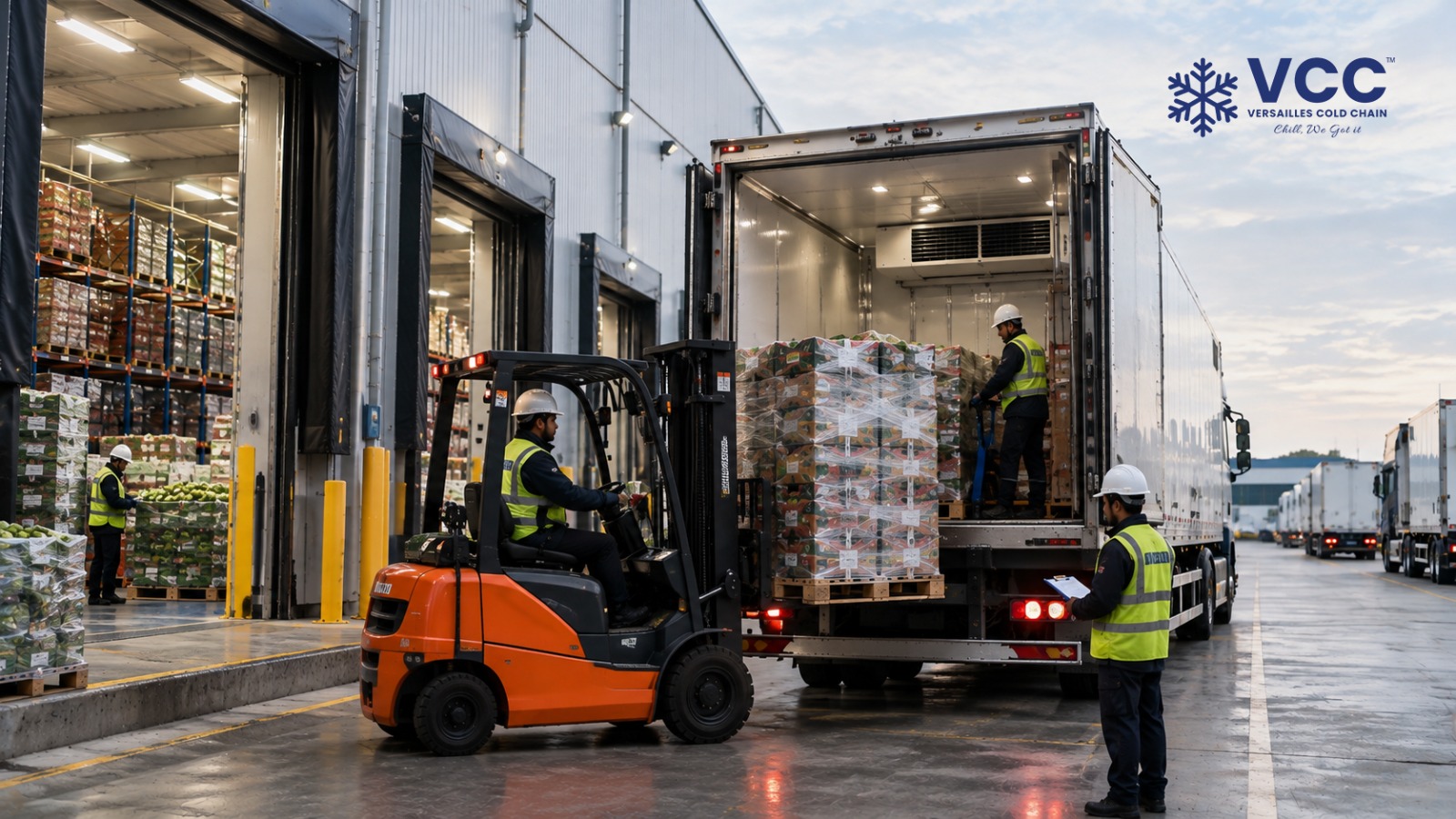
Such jobs are most effective when done by the same person who drives the truck. Kitted orders which exit the cold environment of the packing station and move straight to the refrigerated reefer without ever coming into contact with warm air represent efficient cold chain logistics. Split those jobs across three vendors and every handover becomes a chance for a carton to warm up, and a reason for each side to point at the other.
Before you sign with anyone, ask four questions. Which jobs happen inside the cold zone? How are they priced? How many units can the team handle in a shift? What happens in peak season? Clear, quick answers usually mean the work is done that way every day.
Ready When You Are
Versailles Cold Chain is built for cargo that can’t afford a single degree of error. It brings GDP-compliant storage, IoT-tracked real-time temperature monitoring and temperature controlled transport under one operator, for pharmaceuticals, vaccines, dairy, frozen foods and other perishables.
If you’re planning value added services for a pharma, dairy or frozen food line, tell us your products, temperature bands and the tasks you need done. You can request a quote or a facility walkthrough and see how stock is handled before you decide.